
Most UK universities are already digital in parts but not truly digital-first. The difference decides who leads and who lags behind.
The modern university is no longer defined by buildings and lecture halls. It’s defined by connectivity, experience, and data. Across the UK, universities are rethinking how they deliver education, manage operations, and engage students.
This shift toward digital transformation in higher education UK isn’t just about technology; it’s about transforming how universities function, make decisions, and serve their communities.
Why “Digital-First” Matters for Higher Education in the UK

The pandemic accelerated a long-overdue transformation in higher education. What began as a temporary move to online teaching has now evolved into a permanent expectation for flexibility, accessibility, and personalised experiences.
Today’s universities face:
- Rising student expectations for hybrid learning and digital services
- Increased competition from online and global institutions
- Pressure to optimise operations amid budget constraints
- Demand for data-driven decision-making across departments
A digital-first university doesn’t just digitise existing processes, it reimagines them. It uses technology to simplify work, empower staff, and improve the student experience at every touchpoint.
By prioritising digital transformation in higher education UK, institutions can bridge the gap between academic goals and operational excellence, creating a connected campus that’s both efficient and student-centric.
The Three Pillars of a Digital-First University
Becoming digital-first requires more than new software. It’s a cultural and operational shift built around three core pillars:
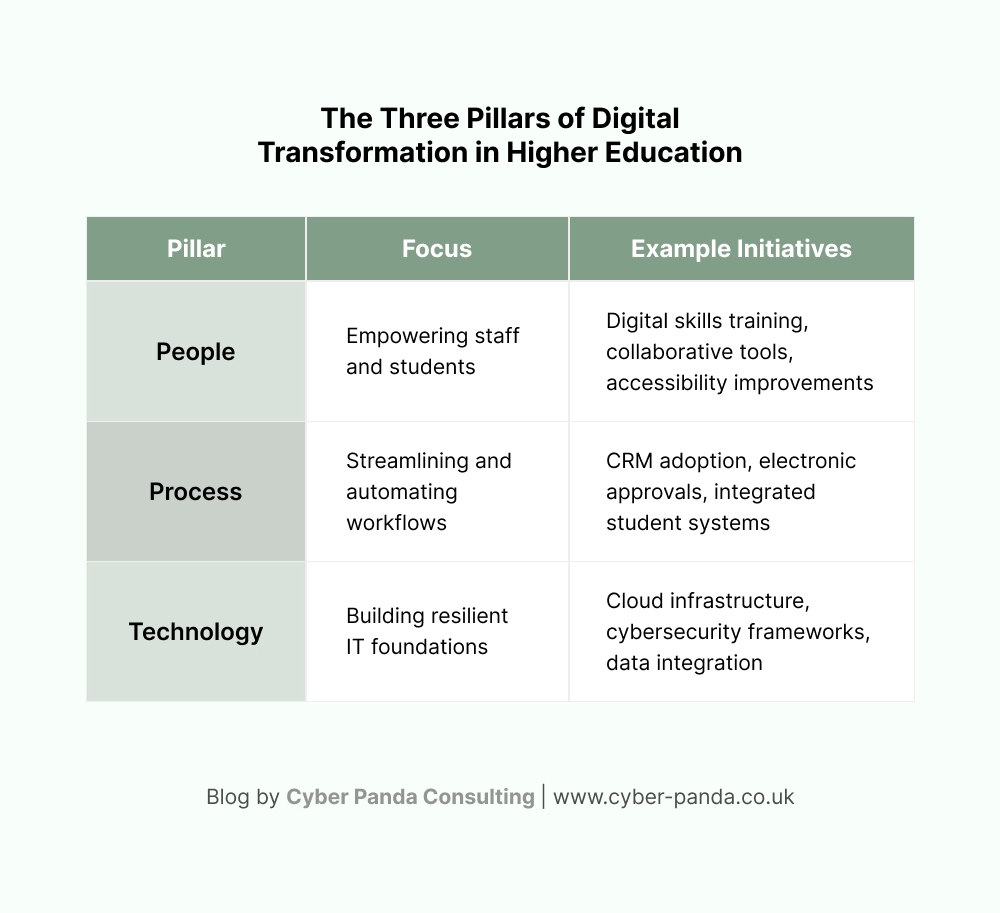
These pillars ensure that digital investments lead to measurable improvements, not just new tools that sit unused.
To explore how strong academic data structures support digital-first strategies, read our article on Curriculum Management Systems in UK Higher Education.
Common Barriers to Digital Transformation in Universities
While every university understands the importance of going digital, many struggle to make it happen effectively. The challenges often lie in governance, change management, and alignment rather than technology itself.
Typical barriers include:
- Siloed decision-making between faculties and IT
- Legacy systems with poor data integration
- Change fatigue among staff
- Underestimation of process redesign needs
- Lack of clarity around digital ownership or leadership
Addressing these issues requires structured change management; ensuring that people, policies, and systems evolve together.
How Universities Can Begin Their Digital Transformation Journey
At Cyber Panda Consulting, we’ve supported universities through every stage of their transformation journey, from strategy design to implementation and reinforcement. Here’s a simplified roadmap institutions can follow:
- Assess Readiness and Define Vision
Evaluate current digital maturity and establish a shared vision aligned with strategic goals. This step helps leadership agree on priorities and identify gaps. - Map Key Processes and Pain Points
Before selecting any technology, understand how your teams currently work. Map key workflows from student recruitment to graduation, and identify inefficiencies. - Select Scalable Systems
Choose platforms that can grow with your institution, such as CRM, SIS, and LMS systems that integrate seamlessly and support your operating model. - Engage Stakeholders Early
Build buy-in from academics, administrators, and IT teams. Transparent communication and visible sponsorship are critical for success. - Invest in Change Management and Training
Ensure staff feel confident using new tools. Offer practical, role-based training and follow up with continuous support. - Measure, Improve, Repeat
Use analytics and feedback loops to measure impact and refine over time. A digital-first culture thrives on iteration, not one-time delivery.
The Role of IT Governance and Cybersecurity
As universities embrace digital-first operations, governance and security become mission-critical.
Institutions must establish clear policies around:
- Data ownership and access
- Compliance (GDPR, accessibility standards, Cyber Essentials)
- Incident management and system accountability
Cyber Panda’s team works with universities to strengthen IT governance; ensuring compliance, resilience, and confidence across departments.
Preparing for the Next Decade of Digital Higher Education
The future of higher education will be defined by how well institutions integrate technology with purpose. Artificial Intelligence, predictive analytics, and automation will shape how students learn, how staff work, and how leadership makes decisions.
The universities that succeed will not simply digitise, they will transform.
Becoming truly digital-first means building a connected institution where systems talk to each other, data drives insight, and people have the tools to innovate confidently.
Whether you’re just starting your transformation journey or refining existing systems, Book a free consultation today
Frequently Asked Questions
The best starting point is a clear digital maturity assessment. Cyber Panda offers structured readiness audits that help you understand your current strengths, gaps, and priorities before defining your strategy.
Timelines vary depending on the scale of change. Most universities begin to see measurable improvements within 6–12 months, with deeper transformation programs extending over 2–3 years.
Universities typically see faster administrative workflows, stronger student engagement, improved decision-making through better data, and enhanced staff collaboration.
Change management is a core part of our approach. We help universities design training programs, communication plans, and feedback loops to ensure staff feel confident and supported throughout the transition.
Absolutely. Digital-first strategies can be scaled to fit the size, budget, and goals of any educational institution from specialist colleges to multi-campus universities.
Every university has unique needs, so we tailor our pricing to your objectives and current systems. We can provide a clear estimate after an initial consultation.
We combine sector-specific experience in UK higher education with a practical, collaborative approach aligning technology, people, and governance to deliver lasting change.